
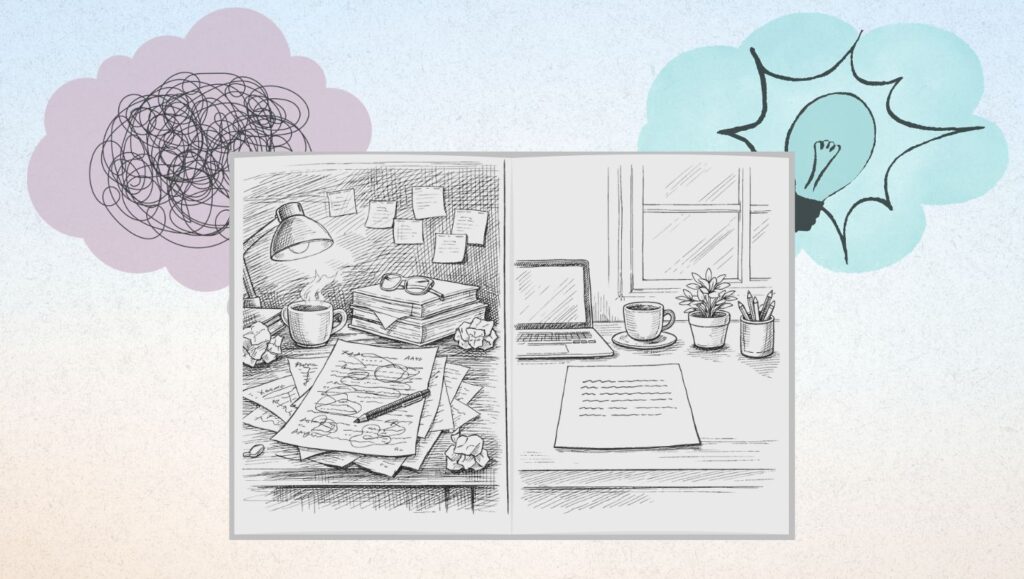
You’re looking at your draft, ready to edit. Recognise any of these thoughts?
I just want to sound more intelligent.
I need to polish this.
It sounds too simple.
If you are hearing these voices, you’re not alone – they’re familiar to many writers. The trouble is, they’re often leading you astray. Attempts to sound clever or intelligent can actually make writing much harder to understand.
It’s usually perfectionists who think this way – writers who hold themselves to very high standards. They want to be taken seriously; to have their thoughts received with respect. However, I’d argue that they’re looking at the wrong standard: instead of complexity of expression, they should be aiming for clarity.
Whether it’s an essay, a business email, or a political campaign, the same principle applies: if the reader has to work to understand you, something isn’t working.
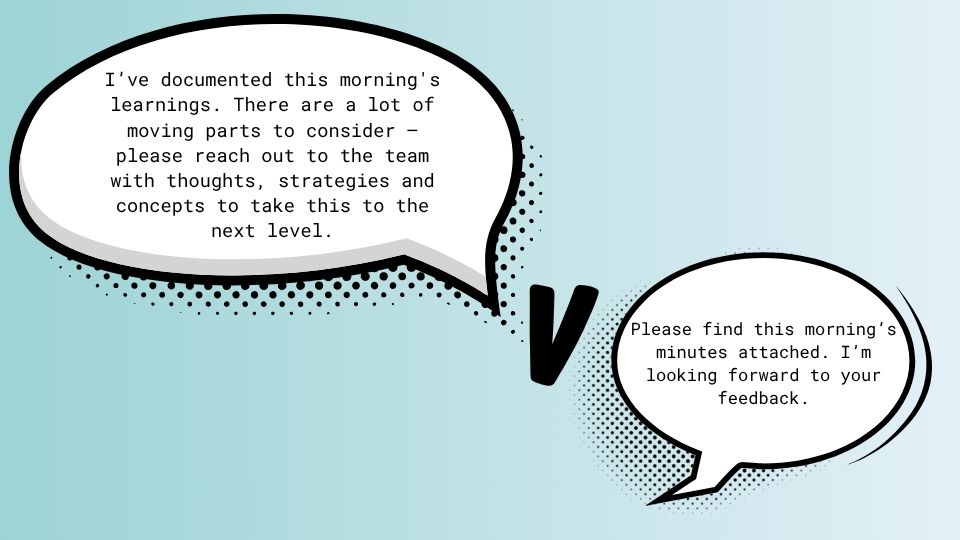
The central problem with aiming to for complexity is that you end up getting in the way of yourself. Complexity can cloud meaning. When we focus too much on sounding impressive, our writing often becomes convoluted. Sentences grow longer and more complex. Ideas get over-qualified. We hedge our claims with words like perhaps, arguably, or in some respects. We move away from strong, active verbs and towards abstract language. We might default to passive voice instead of active voice. Sometimes we even avoid making a clear claim altogether.
A more useful goal is simple: can your reader understand what you are trying to say?
Clarity means ease of understanding. It doesn’t mean the content itself is easy or comfortable — it means the reader can follow your thinking without effort.
When I was teaching, I often saw anxious writers over rather than under write. They added more and more in an attempt to be precise or impressive (or to fool me into thinking they knew what they were talking about!), but this often made their thinking harder to follow.
Complex writing can be like a stage magician who uses showy gesturing and illusion to hide the lack of real magic. (No, I don’t think magic is actually real – you know what I mean!) Writing can appear sophisticated — grammatically correct, full of complex vocabulary — but underneath, the ideas may be unclear. The polish becomes a mask for a lack of coherence. A sentence might be technically flawless, but so long or complicated that it becomes exhausting to read. Or complex vocabulary might be used to disguise uncertainty about the underlying idea.
When you’re editing, shift your thinking from a focus on perfection or sounding intelligent, to clarity. Try thinking in these contrasts:
- Does this sound clever, or does it make sense immediately?
- Is this sophisticated, or can the reader follow my thinking?
- Have I privileged elegant phrasing, or is my main idea clearly visible?
This is what I mean by a shift from perfection to clarity.

One clear idea does.
If clarity is your goal — particularly during editing — there are some practical strategies you can use.
- Be ruthless about what matters. If a point is minor or secondary, consider removing it. Not every idea needs to stay.
- Look for abstract nouns and consider turning them into active verbs. For example, instead of happiness, could you write to be happy?
- Break up long sentences. If a sentence feels heavy or difficult to read, it can often become two shorter sentences.
- Make your main idea visible early — ideally at the start of a paragraph. Think like a print journalist: lead with the key point.
- Remove hedging language where possible. Phrases like it might be argued that or it seems that often weaken your writing without adding value.
There’s also a broader cultural layer to this. We often equate complexity with intelligence. We’re conditioned to think that academic language — dense, formal, abstract — is more sophisticated in the same way we’re encouraged to see academic prowess as ‘better’ or more valuable that other success. Some professional environments even reward this kind of language.
I remember, when doing postgraduate study, genuinely struggling to understand some textbooks. The writing was dense and abstract, and clarity seemed secondary. It made me angry and frustrated. Because I’ve always been an avid reader, and I’d already been at university a while, I was able to see that it might be a problem with the writing rather than me.
However, I work with a lot of people attempting study for the first time who find this unnecessary complexity of language an overwhelming barrier. Of course, in some fields — such as medicine or engineering — technical language is necessary for precision. When both writer and reader speak the same technical language, there’s an ease of comprehension and communication that actually reinforces my point. For those people, using language in a complex way IS the simplest way to make the message clear. But if they were talking to me, they’d need to adjust!
As a writer, there’s also an element of fear, that if we write clearly and simply, we’ll be seen as simplistic — or even unintelligent. But simple and simplistic are not the same. Clear, direct language should be valued.
You can see this tension play out in public language. In high-stakes contexts — such as election campaigns — language often becomes more cautious and more polished. Sentences become longer, claims are softened, and familiar phrases are repeated because they feel safe.
If you’ve been following along with my Election Bingo cards, you’ll recognise this immediately. The repetition isn’t accidental — it’s strategic. But while it may reduce risk for the speaker, it often increases confusion for the audience.
If I’ve convinced you to aim for clarity, try this simple test:
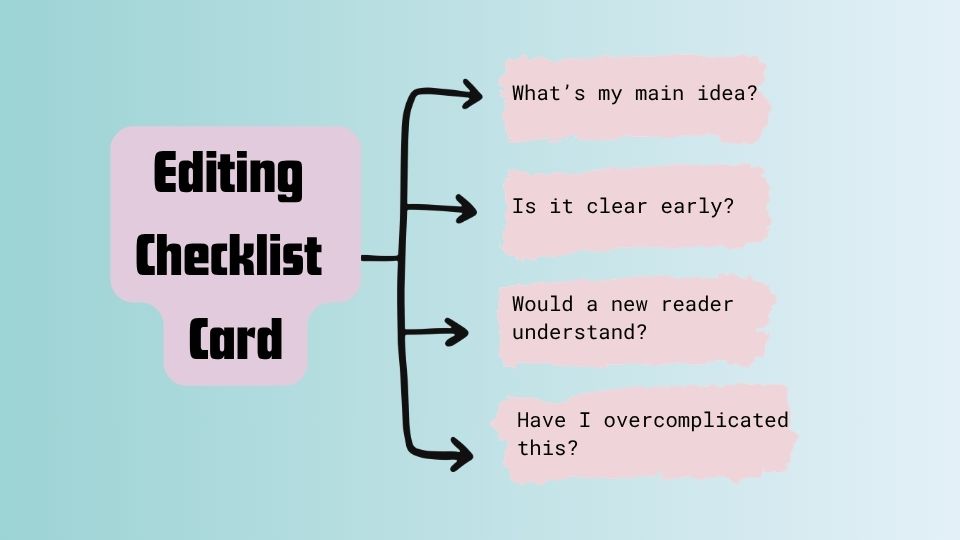
After writing a paragraph, ask yourself:
- Can I state the main idea in one sentence?
- Is that idea visible early?
- Would someone unfamiliar with the topic understand it?
- Have I made this more complicated than it needs to be?
-
Edit for clarity, not performance.
One useful technique is to “reverse plan” your writing. After drafting, reduce each paragraph to a single sentence. This becomes a clarity check — a way to see whether your ideas are actually clear and coherent.
Ultimately, aiming for perfection can protect you from the consequences of your own words. It allows you to hide behind complexity.
Aiming for clarity does the opposite. It connects you with your reader.
Making your writing make sense requires courage — the courage to say what you mean plainly.
Clear writing is not a reduction of intelligence. It is a disciplined way of expressing it.
If you want to train your eye for this, my Election Bingo cards (available as a free download) are a good place to start. Slightly cynical, mildly entertaining — and surprisingly effective at helping you see when language is doing its job… and when it isn’t.